When I was more or less a young man, I was introduced to the Japanese screen character, Zatoichi. The basic premise of Zatoichi films was that though blind, he could see right and wrong with faster clarity than the sighted; with heightened sense of hearing, he ably compensated for not seeing as he cut down his opponents in massive scale; and, with his bow legged gait and plain face, he was decidedly unheroic.
On a recent flight to Asia, I was surfing through the menu of films selections when "Ichi" caught my attention. The film began with a woman in rags stumbling alone in a blinding snowstorm. It was not immediately apparent that she was connected to Zatoichi.
As the story unfolded, the woman turned out to be a beautiful blind young girl who had been kicked out of the “goze” troupe. In medival Japan, goze troupes went around northern Japan entertaining gatherings with their singing and while strumming the shamisen. In flash backs, it was revealed that the manager of the troupe who was male and not blind had raped her. When he tried again, she accidentally killed him with her sword sheathed in her cane.
The movie actually started with her wandering in the countryside and ended up in a temple. One of three members of gangsters had sex with another blind goze woman and did not pay as promised. When she protested, they beat her and then they saw Ichi and started to harass her with obviously evil intentions. This is when a young good looking samurai came along and offered money to the gangsters in exchange for leaving Ichi alone.
Make long story short, the young samurai, Toma, had a psychological block and cannot pull out his sword from the scabbard and Ichi had to killed the three gangsters herself. The villagers thought it was Toma who killed the gangsters that had been terrorizing them. The rest of the gang of bandits too thought it was Toma who killed their comrades.
Ichi has been searching for a blind masseur (the film implied that this was Zatoichi but never said so) who raised her and taught her how to fight. She wanted to know if he was her father. Banki, the gangster leader, before defeating her and taking her prisoner told her that the blind masseur was the one person he wanted to meet who had died of natural causes.
Toma who was hired by the village to defend them was a colossal disappointment because he never could pull his sword from the scabbard. Banki was rejected by society because of his severely disfigured face. Everybody suffered from psychological problems.
There was a final bloody, sword-play confrontation between the villagers led by Toma and Banki and his gang. Of course, having fallen in love for Ichi, Toma was finally able to unsheathe his sword but the climatic ending is typically Japanese and not western.
The cinematography was exquisite and the story line more complex than the old Zatoichi stories. I hope we will see more of Ichi in the future.
Thursday, July 14, 2011


Sunday, June 26, 2011
Her Mother Remembers Iris Chang
Ms. Ying-Ying Chang has written a book (The Woman Who Could Not Forget) about her daughter and gifted author, the late Iris Chang, and about their mother-daughter relationship. Iris was at the top of her game as an amazing writer of history and non-fiction when she shocked the world by taking her own life. Many speculated about the cause of her death. Her mother was driven to write this book to set the record straight and preserve the memory of her daughter.
I got to know Iris when she became a member of The Committee of 100 after the publication of her worldwide bestseller, The Rape of Nanking. I found her to be passionate about the subjects she wrote about and highly intelligent in how she saw the world. As her mother described in her book, Iris was outraged by injustices in any form and was particularly sensitive to the rights and equality of women.
I was among the minority that did not read her book on the Rape of Nanking. In my case, I simply could not bear the thought of again reading the graphic descriptions of Japanese atrocities already known to me and becoming enraged once again by Japan’s refusal to apologize for the crimes against humanity that they committed in WWII. From Ying-Ying’s book, I came to appreciate that Iris identified herself with the heroic action of Minnie Vautrin in protecting the lives of Chinese civilians--eventually at the cost of her own life. I had read about Minnie Vautrin before I met Iris.
When Iris decided to write the history of Chinese immigrants in America, I was delighted. It was a subject dear to my heart whose scope and complexity needed someone of Iris’ skills and dedication to do it justice. When the book came out, I read it promptly and wrote a review on my own volition. Iris contacted me and asked for permission to use a portion of my review as part of the blurb on the cover of the paperback edition. Naturally, I was flattered that she thought enough to want to include it.
I also organized a book signing for Iris at Ming’s, a restaurant in Palo Alto. Many came to hear her and talk to her. I recalled a set of parents originally from China that brought their young daughter and had photos taken of their daughter beaming with pride standing next to Iris. At the time, I remember thinking to myself that although Iris said all the right things and was gracious toward her audience, she seemed a little stiff and awkward. Upon reading Ying-Ying’s book, I now understand that Iris had suffered the stresses of a frenetic book tour and was beginning to experience the strains of her illness.
The news of her suicide surprised and shocked us all and was beyond any comprehension. I got to know Iris’ parents after her death as a member of the team working to preserve her memory by staging a worldwide annual essay contests on war crimes and atrocities. During the three years that the essay contest was held, Ying-Ying spoke about her resentment of a series of specious speculations on the cause of Iris’ death. She eventually took time off to write a book that revealed the intimate details of a strong bond between a loving daughter and a devoted mother.
Ying-Ying made a strong case that lack of sleep and nutrition led to Iris’ initial mental illness. Improper psychiatric diagnosis led to prescriptions of antipsychotic medications that not only did not help her but the side effects actually pushed her into the abyss. Mental illness is considered shameful and difficult in the Chinese culture to admit and owned up to. It took a lot of mother’s love and courage to want to address Iris’ illness and document her tragic end as a warning for the benefit others.
If you want to understand how Iris became a hugely successful writer, read this book. If you want to learn about the uncertainties of current state of psychiatric medicine and the perils of antipsychotic treatment, you need to read this book. If you believe that successful daughters need not spring from Tiger Moms but from warm, loving and supportive parents, this is a book for you and an effective antidote to rampant Amy Chua-ism.
I got to know Iris when she became a member of The Committee of 100 after the publication of her worldwide bestseller, The Rape of Nanking. I found her to be passionate about the subjects she wrote about and highly intelligent in how she saw the world. As her mother described in her book, Iris was outraged by injustices in any form and was particularly sensitive to the rights and equality of women.
I was among the minority that did not read her book on the Rape of Nanking. In my case, I simply could not bear the thought of again reading the graphic descriptions of Japanese atrocities already known to me and becoming enraged once again by Japan’s refusal to apologize for the crimes against humanity that they committed in WWII. From Ying-Ying’s book, I came to appreciate that Iris identified herself with the heroic action of Minnie Vautrin in protecting the lives of Chinese civilians--eventually at the cost of her own life. I had read about Minnie Vautrin before I met Iris.
When Iris decided to write the history of Chinese immigrants in America, I was delighted. It was a subject dear to my heart whose scope and complexity needed someone of Iris’ skills and dedication to do it justice. When the book came out, I read it promptly and wrote a review on my own volition. Iris contacted me and asked for permission to use a portion of my review as part of the blurb on the cover of the paperback edition. Naturally, I was flattered that she thought enough to want to include it.
I also organized a book signing for Iris at Ming’s, a restaurant in Palo Alto. Many came to hear her and talk to her. I recalled a set of parents originally from China that brought their young daughter and had photos taken of their daughter beaming with pride standing next to Iris. At the time, I remember thinking to myself that although Iris said all the right things and was gracious toward her audience, she seemed a little stiff and awkward. Upon reading Ying-Ying’s book, I now understand that Iris had suffered the stresses of a frenetic book tour and was beginning to experience the strains of her illness.
The news of her suicide surprised and shocked us all and was beyond any comprehension. I got to know Iris’ parents after her death as a member of the team working to preserve her memory by staging a worldwide annual essay contests on war crimes and atrocities. During the three years that the essay contest was held, Ying-Ying spoke about her resentment of a series of specious speculations on the cause of Iris’ death. She eventually took time off to write a book that revealed the intimate details of a strong bond between a loving daughter and a devoted mother.
Ying-Ying made a strong case that lack of sleep and nutrition led to Iris’ initial mental illness. Improper psychiatric diagnosis led to prescriptions of antipsychotic medications that not only did not help her but the side effects actually pushed her into the abyss. Mental illness is considered shameful and difficult in the Chinese culture to admit and owned up to. It took a lot of mother’s love and courage to want to address Iris’ illness and document her tragic end as a warning for the benefit others.
If you want to understand how Iris became a hugely successful writer, read this book. If you want to learn about the uncertainties of current state of psychiatric medicine and the perils of antipsychotic treatment, you need to read this book. If you believe that successful daughters need not spring from Tiger Moms but from warm, loving and supportive parents, this is a book for you and an effective antidote to rampant Amy Chua-ism.
Wednesday, May 25, 2011
World Financial Security and the U.S.
Last week, I attended an international symposium on “Financial Security: China and the World,” held in Beijing and sponsored by China Institute for International Strategic Studies and the Katie Chan Foundation. Speakers came from all over the world including a former President of the European Commission, a former First Secretary of State of the UK and a former President of China’s Export and Import Bank.

Chen Fengying, George Koo & Katie Chan
Inevitably, the status of the U.S. financial health was on the minds of most of the speakers. They raised concerns over the mounting national debt and expressed skepticism as to whether any real solution has been proposed. One economist pointed out that interest payment could take up 20% of the US government revenue now and debt service by 2040 could amount to 58% of the total revenue, clearly an unsustainable proposition.
The US budget deficit continues to increase with no end in sight and counting on foreigners to continue to buy 70% of the US debt remains a keystone to the US strategy. But the foreign appetite for US treasuries cannot keep up with growing supply. As America having to print more money as the only resort becomes more obvious, foreign buyers will avoid buying rather than increase their purchase which will exacerbate the debt crisis.
Concerns were also raised over the prospects of the financially strong nations in the European Union having to bail out the weak yet again. The Germans in particular may face having to bail out the bad debt nations or bail out the over-exposed German banks that carried too much sovereign bad debt in their books. Eventually, the EU will have to create a bail out mechanism that does not look like bail outs in order to overcome domestic political pressures among donor nations.
The speaker from Australia announced that his nation suffered least from the financial tsunami and experienced no recession from 2007 to 2010. Australian banks continue to lend and provided the highest shareholder return among the world’s leading banks. In addition to having China as its major customer, he attributed strong regulation and close government supervision as the cause of the success of the banking sector.
There was universal agreement among the speakers that the world needs regulatory reform in order to prevent another financial meltdown. The speaker from Singapore pointed out that having Standard & Poor or Moody’s provide sell side credit rating for a fee is basically flawed. He offered a not-for-profit organization to compute creditworthiness based on scientifically sound methodologies and offer access to the ratings free of charge to users.
Comments by Mme Chen Fengying, Director of World Economic Studies, China Institute of Contemporary International Relations made quite an impression on me. She said while 9-11 radically changed the U.S. perspective on terrorism, 9-15 (the date Lehman Brothers filed for chapter 11) has led to financial terrorism. Heretofore the world looked up to the US financial model. Now the world needs to look for another.
Ms. Chen went on to say the US debt has now exceeded its GDP by over 30 fold*. She wondered how this could be sustainable but then she professed not to understand how 98% of dot com companies in the US could lose money and not suffer in the price of the their stock. She labeled the US as a credit card economy.
Only 11% of the US GDP comes from manufacturing while nearly twice that percentage comes from financial services sector of the economy. “Wall Street is supposed to serve the economy,” Ms. Chen said, “And not to hold the White House hostage.”
One veteran America watcher from China commented on the current US budget and debt service crisis and speculated that the two political parties will begin by taking on extreme and polarized positions but hopefully in the last minute the Congress will end brinksmanship and do the right thing. If the US government actually collapses, the financial terror that will strike the collective hearts of the world would be beyond comprehension.
I spoke by comparing the economies of Macao with Singapore and it is reported on Peoples’ Daily Online.
======================
* A friend who read the blog commented that total US debt, public + business + financial + household, amount to approximately 52 trillion, which is 3.6 times GDP. Accounting for all public and private sector assets, US probably has a net worth about 5 times its GDP. In other words, the US debt crisis is serious but not so dire as presented by Ms. Chen.

Chen Fengying, George Koo & Katie Chan
Inevitably, the status of the U.S. financial health was on the minds of most of the speakers. They raised concerns over the mounting national debt and expressed skepticism as to whether any real solution has been proposed. One economist pointed out that interest payment could take up 20% of the US government revenue now and debt service by 2040 could amount to 58% of the total revenue, clearly an unsustainable proposition.
The US budget deficit continues to increase with no end in sight and counting on foreigners to continue to buy 70% of the US debt remains a keystone to the US strategy. But the foreign appetite for US treasuries cannot keep up with growing supply. As America having to print more money as the only resort becomes more obvious, foreign buyers will avoid buying rather than increase their purchase which will exacerbate the debt crisis.
Concerns were also raised over the prospects of the financially strong nations in the European Union having to bail out the weak yet again. The Germans in particular may face having to bail out the bad debt nations or bail out the over-exposed German banks that carried too much sovereign bad debt in their books. Eventually, the EU will have to create a bail out mechanism that does not look like bail outs in order to overcome domestic political pressures among donor nations.
The speaker from Australia announced that his nation suffered least from the financial tsunami and experienced no recession from 2007 to 2010. Australian banks continue to lend and provided the highest shareholder return among the world’s leading banks. In addition to having China as its major customer, he attributed strong regulation and close government supervision as the cause of the success of the banking sector.
There was universal agreement among the speakers that the world needs regulatory reform in order to prevent another financial meltdown. The speaker from Singapore pointed out that having Standard & Poor or Moody’s provide sell side credit rating for a fee is basically flawed. He offered a not-for-profit organization to compute creditworthiness based on scientifically sound methodologies and offer access to the ratings free of charge to users.
Comments by Mme Chen Fengying, Director of World Economic Studies, China Institute of Contemporary International Relations made quite an impression on me. She said while 9-11 radically changed the U.S. perspective on terrorism, 9-15 (the date Lehman Brothers filed for chapter 11) has led to financial terrorism. Heretofore the world looked up to the US financial model. Now the world needs to look for another.
Ms. Chen went on to say the US debt has now exceeded its GDP by over 30 fold*. She wondered how this could be sustainable but then she professed not to understand how 98% of dot com companies in the US could lose money and not suffer in the price of the their stock. She labeled the US as a credit card economy.
Only 11% of the US GDP comes from manufacturing while nearly twice that percentage comes from financial services sector of the economy. “Wall Street is supposed to serve the economy,” Ms. Chen said, “And not to hold the White House hostage.”
One veteran America watcher from China commented on the current US budget and debt service crisis and speculated that the two political parties will begin by taking on extreme and polarized positions but hopefully in the last minute the Congress will end brinksmanship and do the right thing. If the US government actually collapses, the financial terror that will strike the collective hearts of the world would be beyond comprehension.
I spoke by comparing the economies of Macao with Singapore and it is reported on Peoples’ Daily Online.
======================
* A friend who read the blog commented that total US debt, public + business + financial + household, amount to approximately 52 trillion, which is 3.6 times GDP. Accounting for all public and private sector assets, US probably has a net worth about 5 times its GDP. In other words, the US debt crisis is serious but not so dire as presented by Ms. Chen.
Tuesday, May 24, 2011
A counterpoint to the Three Gorges Dam Controversy
China's Three Gorges Dam was first conceived by Dr. Sun Yat Sen in the early republican period. It was finally realized in recent times when China had the resources to build the dam. As with any high profile project, the dam attracted a lot of attention. Most from the west tend to be critical including a recent spate of them. I came across a well reasoned arguments that presented the positive sides of this project. With the author's permission, I am posting his comments below:
----------------------------------------------------------
Some three years ago, I recall a similar article on the Three Gorges Dam by Shai Oster, in the Wall Street Journal, suggesting that disaster will soon befall the Dam. Alas, no catastrophe happened to the Dam in the intervening years, but it seems that there remains a clan of people in America anxious to see the “demise” of the Dam in some way.
If we roll back the history of the Dam, we will recall that when China applied to the World Bank for a loan to build the Dam nearly twenty years ago, it was the U.S. who exerted strong pressure on the Bank to deny loan to China. As a result China had to foot the bill herself. But China persevered. Not only did it managed to come up with the huge sum to pay for the enormous job of building the world’s largest dam (which it still is), but it also managed to finish the job on time.
Fast forward to the time of the article of Mr. Oster; at that time the Dam was not yet finished, but there was a significant carping chorus from the U.S. who cited all the factors mentioned in the present articles and more, and strongly suggested that the Dam will be a failure.
At that time I wrote a response which basically said: “Cool it!” I mentioned that from all the reports from within China, and all those who took the Yangtze River cruise through the Dam seemed to say that while the project encountered some problems, they were not such as to slow the project or to impact the project negatively.
Now to the present; I am very sad to see that the carping chorus has not been quieted. Both of the articles forward by Roger quote a “brief statement” from the Communist Party, but then try to play it up like a doomsday announcement.
It happened that Premier Wen Jiabao himself also made a brief statement a few days ago. The gist of it was that the Dam is now finished and doing its job, but that China should not forget the few problems uncovered during the building of the Dam and should work to overcome them.
The editorial from the Washington Post did acknowledge that: “Though the project has generated much-needed electric power and helped control floods, ….” But power generation and flood control were in fact the two major reasons for China to build the Dam in the first place. In all respects, the Dam seems to have carried out these two functions very well. It is now capable of generating enough electricity to power a city the size of Shanghai; and last fall it showed its mettle in helping to relieve the potential big flood plaguing the upper part of the Yangtze.
For a project of unprecedented magnitude, it should not be surprising that it encountered various difficulties. The important question is whether they are surmountable. The “numerous problems” (actually five) cited by Venetia Rainey appear to be all readily solvable if they are seriously addressed. For example, the “small earthquakes” actually were shifting of the ground experienced by some localities because of the added weight of water. I believe the frequency of these incidences is decreasing, and by moving people away from areas where the incidences were more frequent, the problem is essentially overcome. Landslides also occurred in some of these areas, with rocks and earth falling at the side of the river. Again these occurrences are rarer now.
The silt deposits at the upstream side of the dam was something the experts in China worried about ever since the first large dam was built on the Yellow River (which infamously carries a huge volume of silt from the Loess Plateau up stream). However, the Chinese engineer devised a “silt flushing” mechanism which was first successfully applied at the Xiolangde dam, the largest on the Yellow River. The same method has been built into the Three Gorges Dam and the silt threat has been basically removed (the amount of silt on the Yangtze is much less than on the Yellow River to start with).
It will be time-wasting to refute the charges of these articles point by point. But from reports of those who visited the Dam lately via cruises or other mean, the Dam, fully operational, is looking majestic, and is enjoying a booming tourist trade. Where previously only 3000 ton ships can go from Shanghai to Chongqing, now the River can accommodate ships up to 10,000 tons. It has already played a role in flood relief on at least two occasions. In short, the Dam is alive and well, thank you!
I do however hope that the nay-sayers find better things to do. If they still want to carp, how about writing articles on the sad state of American infrastructure, where a great deal of it is old and decrepit and hardly any new construction is taking place.
Jay Hsu
----------------------------------------------------------
Some three years ago, I recall a similar article on the Three Gorges Dam by Shai Oster, in the Wall Street Journal, suggesting that disaster will soon befall the Dam. Alas, no catastrophe happened to the Dam in the intervening years, but it seems that there remains a clan of people in America anxious to see the “demise” of the Dam in some way.
If we roll back the history of the Dam, we will recall that when China applied to the World Bank for a loan to build the Dam nearly twenty years ago, it was the U.S. who exerted strong pressure on the Bank to deny loan to China. As a result China had to foot the bill herself. But China persevered. Not only did it managed to come up with the huge sum to pay for the enormous job of building the world’s largest dam (which it still is), but it also managed to finish the job on time.
Fast forward to the time of the article of Mr. Oster; at that time the Dam was not yet finished, but there was a significant carping chorus from the U.S. who cited all the factors mentioned in the present articles and more, and strongly suggested that the Dam will be a failure.
At that time I wrote a response which basically said: “Cool it!” I mentioned that from all the reports from within China, and all those who took the Yangtze River cruise through the Dam seemed to say that while the project encountered some problems, they were not such as to slow the project or to impact the project negatively.
Now to the present; I am very sad to see that the carping chorus has not been quieted. Both of the articles forward by Roger quote a “brief statement” from the Communist Party, but then try to play it up like a doomsday announcement.
It happened that Premier Wen Jiabao himself also made a brief statement a few days ago. The gist of it was that the Dam is now finished and doing its job, but that China should not forget the few problems uncovered during the building of the Dam and should work to overcome them.
The editorial from the Washington Post did acknowledge that: “Though the project has generated much-needed electric power and helped control floods, ….” But power generation and flood control were in fact the two major reasons for China to build the Dam in the first place. In all respects, the Dam seems to have carried out these two functions very well. It is now capable of generating enough electricity to power a city the size of Shanghai; and last fall it showed its mettle in helping to relieve the potential big flood plaguing the upper part of the Yangtze.
For a project of unprecedented magnitude, it should not be surprising that it encountered various difficulties. The important question is whether they are surmountable. The “numerous problems” (actually five) cited by Venetia Rainey appear to be all readily solvable if they are seriously addressed. For example, the “small earthquakes” actually were shifting of the ground experienced by some localities because of the added weight of water. I believe the frequency of these incidences is decreasing, and by moving people away from areas where the incidences were more frequent, the problem is essentially overcome. Landslides also occurred in some of these areas, with rocks and earth falling at the side of the river. Again these occurrences are rarer now.
The silt deposits at the upstream side of the dam was something the experts in China worried about ever since the first large dam was built on the Yellow River (which infamously carries a huge volume of silt from the Loess Plateau up stream). However, the Chinese engineer devised a “silt flushing” mechanism which was first successfully applied at the Xiolangde dam, the largest on the Yellow River. The same method has been built into the Three Gorges Dam and the silt threat has been basically removed (the amount of silt on the Yangtze is much less than on the Yellow River to start with).
It will be time-wasting to refute the charges of these articles point by point. But from reports of those who visited the Dam lately via cruises or other mean, the Dam, fully operational, is looking majestic, and is enjoying a booming tourist trade. Where previously only 3000 ton ships can go from Shanghai to Chongqing, now the River can accommodate ships up to 10,000 tons. It has already played a role in flood relief on at least two occasions. In short, the Dam is alive and well, thank you!
I do however hope that the nay-sayers find better things to do. If they still want to carp, how about writing articles on the sad state of American infrastructure, where a great deal of it is old and decrepit and hardly any new construction is taking place.
Jay Hsu
Wednesday, April 20, 2011
Is Gary Locke America’s Answer to China’s Anson Burlingame?
Assuming that he is an unworthy target for obstructionist politics and is confirmed by the Senate, Gary Locke will be first American of Chinese ancestry to serve as ambassador to China.
Over 140 years ago, Anson Burlingame became the first American to be appointed by the Qing imperial court to serve as ambassador from China to Washington.
There are some interesting mirror image parallels in these two historical appointments and some important differences.
Burlingame was first appointed Ambassador to China by Abraham Lincoln. After six years in that capacity, Prince Gong, the regent behind the throne approached Burlingame and asked if he would accept the appointment as China’s ambassador to the West and help China renegotiate the many unequal treaties signed with the western powers.
Burlingame known for his integrity and highest sense of right and wrong immediately submitted his resignation to Washington and accepted the appointment to represent China. He was credited with the Burlingame Treaty of 1868 between China and the U.S. which recognized the sovereign rights of China.
In 1870, Burlingame died of pneumonia in St. Petersburg while negotiating with the Russian Czar on behalf of China. Less than a decade after his death, the U.S. began to renege on the terms of his treaty but that’s another story.
Locke did not come from China, his father and grandfather did. Locke was born and raised in America. His qualifications to be ambassador come from his past service as governor of Washington and as Secretary of Commerce.
Washington was one of the most active states in building trade relations with China, long before China emerged as a world economic power and predating Locke’s terms as governor. As governor, he was certainly engaged in those initiatives and can rightly claim a leadership role.
Then as Secretary of Commerce, Locke has been one of Obama’s key players in the bilateral relations with China. He can certainly claim ample experience with and knowledge of China
However as the next ambassador, Locke will face some challenges that might be uniquely his because of his being an ethnic Chinese.
In some circumstances, a foreign country does not always welcome a native born who have immigrated to America to return as the ambassador from America. Sometimes such appointments are regarded as a put-down—the psychology of “aren’t we important enough for Washington to send a real American envoy?”
Locke is unlikely to encounter such a form of reverse snobbery because of the strength of his credentials and stature. Instead the Chinese officials might expect more from him because of his presumed cultural affinity than a “real” American.
Even for a Mandarin speaking Jon Huntsman, the Chinese officials would never think of him as one of them but looking at Locke, they might, even if his Mandarin is not as fluent as Huntsman, his predecessor.
The Chinese officials may presume Locke to possess certain cultural empathy and can pick up the nuances and innuendoes that a white person cannot and they would expect Locke to be more sympathetic to the Chinese points of view.
Such a presumption would put Locke in a delicate position since his duties and obligations are to represent America’s interest, not necessarily that of China. Inevitably he will be call on to occasionally deliver hard-nosed messages from Washington, whereupon he would have to exercise his diplomatic skills to moderate America’s traditionally imperious approach.
Locke also risks being challenged by select members of Congress and other Americans on occasions when they are having xenophobic fits and demanding to know, “Whose side are you on?”—a question that would never be asked if Locke were white.
On top of all this, Locke is also becoming America’s envoy to Beijing in a new era when the basis of bilateral relations is shifting from big brother/little brother to one of equals between peers.
While America may not willingly relinquish its position as the senior partner, the reality suggests that the next envoy will have to. As holder of over a trillion dollars in American IOU’s, China expects to be treated with the respect of someone the US is beholden to.
The US China bilateral relation has arguably become the most important in the world. As ambassador, Locke’s priority will be to enhance closer cooperation despite the expected bumps on the road when the two sides cannot agree. Obama faces plenty of challenges for the remainder of his term of office and he does not need China to be among them.
Even though no other American ambassador to China had become a turned-around envoy from China since Burlingame, nearly all, since George H. Bush was appointed by Nixon, have returned from their posting to share their understanding of China with the American public and reject simplistic lambasting frequently indulged by Congress.
Many became proponents and supporters of less confrontational and closer bilateral relations. Whether Locke’s term is two years or more, we can expect him to join the ranks of positive emissaries when he returns from China.
A version of this post appeared in New America Media and subsequently picked up by China-US Focus.
Over 140 years ago, Anson Burlingame became the first American to be appointed by the Qing imperial court to serve as ambassador from China to Washington.
There are some interesting mirror image parallels in these two historical appointments and some important differences.
Burlingame was first appointed Ambassador to China by Abraham Lincoln. After six years in that capacity, Prince Gong, the regent behind the throne approached Burlingame and asked if he would accept the appointment as China’s ambassador to the West and help China renegotiate the many unequal treaties signed with the western powers.
Burlingame known for his integrity and highest sense of right and wrong immediately submitted his resignation to Washington and accepted the appointment to represent China. He was credited with the Burlingame Treaty of 1868 between China and the U.S. which recognized the sovereign rights of China.
In 1870, Burlingame died of pneumonia in St. Petersburg while negotiating with the Russian Czar on behalf of China. Less than a decade after his death, the U.S. began to renege on the terms of his treaty but that’s another story.
Locke did not come from China, his father and grandfather did. Locke was born and raised in America. His qualifications to be ambassador come from his past service as governor of Washington and as Secretary of Commerce.
Washington was one of the most active states in building trade relations with China, long before China emerged as a world economic power and predating Locke’s terms as governor. As governor, he was certainly engaged in those initiatives and can rightly claim a leadership role.
Then as Secretary of Commerce, Locke has been one of Obama’s key players in the bilateral relations with China. He can certainly claim ample experience with and knowledge of China
However as the next ambassador, Locke will face some challenges that might be uniquely his because of his being an ethnic Chinese.
In some circumstances, a foreign country does not always welcome a native born who have immigrated to America to return as the ambassador from America. Sometimes such appointments are regarded as a put-down—the psychology of “aren’t we important enough for Washington to send a real American envoy?”
Locke is unlikely to encounter such a form of reverse snobbery because of the strength of his credentials and stature. Instead the Chinese officials might expect more from him because of his presumed cultural affinity than a “real” American.
Even for a Mandarin speaking Jon Huntsman, the Chinese officials would never think of him as one of them but looking at Locke, they might, even if his Mandarin is not as fluent as Huntsman, his predecessor.
The Chinese officials may presume Locke to possess certain cultural empathy and can pick up the nuances and innuendoes that a white person cannot and they would expect Locke to be more sympathetic to the Chinese points of view.
Such a presumption would put Locke in a delicate position since his duties and obligations are to represent America’s interest, not necessarily that of China. Inevitably he will be call on to occasionally deliver hard-nosed messages from Washington, whereupon he would have to exercise his diplomatic skills to moderate America’s traditionally imperious approach.
Locke also risks being challenged by select members of Congress and other Americans on occasions when they are having xenophobic fits and demanding to know, “Whose side are you on?”—a question that would never be asked if Locke were white.
On top of all this, Locke is also becoming America’s envoy to Beijing in a new era when the basis of bilateral relations is shifting from big brother/little brother to one of equals between peers.
While America may not willingly relinquish its position as the senior partner, the reality suggests that the next envoy will have to. As holder of over a trillion dollars in American IOU’s, China expects to be treated with the respect of someone the US is beholden to.
The US China bilateral relation has arguably become the most important in the world. As ambassador, Locke’s priority will be to enhance closer cooperation despite the expected bumps on the road when the two sides cannot agree. Obama faces plenty of challenges for the remainder of his term of office and he does not need China to be among them.
Even though no other American ambassador to China had become a turned-around envoy from China since Burlingame, nearly all, since George H. Bush was appointed by Nixon, have returned from their posting to share their understanding of China with the American public and reject simplistic lambasting frequently indulged by Congress.
Many became proponents and supporters of less confrontational and closer bilateral relations. Whether Locke’s term is two years or more, we can expect him to join the ranks of positive emissaries when he returns from China.
A version of this post appeared in New America Media and subsequently picked up by China-US Focus.
Monday, April 4, 2011
South Africa, Tourist Destination - 2
 The game watching experience at Kruger is different from that on the Serengeti Plains where herds of animals range freely and predators can be seen stalking them. At Kruger, presence of game is more elusive and one has to work harder to spot them. The hyena appeared on the roadside for a fleeting second and disappeared into the bushes.
Impala is by far the most common sighting but nevertheless one of the handsomest animals on the Reserve.
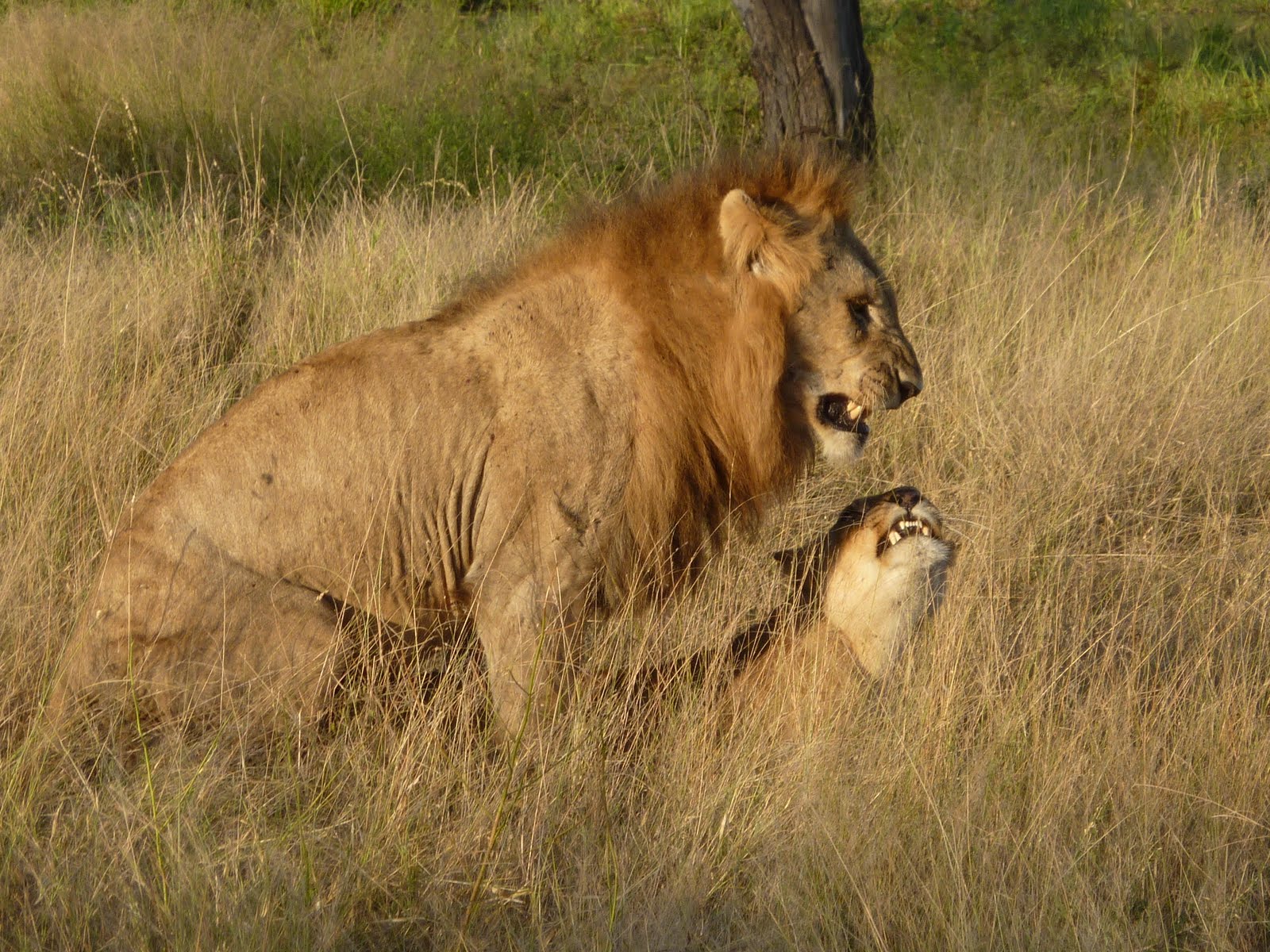
Spotting lions copulating in the bushes is not difficult. While they tryst often, each tryst does not last long. The hard part of catching them in the act is the act itself.
 At the Mkaya Reserve in Swaziland, wild nyalas and warthogs walked freely around the camp grounds and rangers took us on walks for close views of rhinos, tsessebes, zebras and giraffes.
As our ranger quickly backed the safari vehicle out of the way, he said, "You'd never want to get between a herd of elephants and their water."
South Africa as a Tourist Destination
South Africa is a beautiful country: spectacular coast lines on eastern and western part of the country that funnel down to the famous Cape of Good Hope; Drakensberg mountain range with peaks higher than 10,000 feet that runs north-south and divides that the country into a wet eastern region and a dry western region; wild game preserves, waterfalls, beaches, breathtaking mountain passes and Cape Town, the crown jewel of South Africa.
The surface area of South Africa is about 10% larger than the combined territory of California and Texas. Officially the population of South Africa at 50 million is about 10 million less than the two states but there could be as much as 10 million unregistered immigrants from other parts of Africa living in South Africa. Even though California and Texas have illegal immigrants residing within their state borders as well, the number is believed to be vastly less than those in South Africa. My observations of the challenges facing South Africa have been discussed in my earlier blog.
On our tour of South Africa, I find Kruger National Park, Mkaya Preserve in the Kingdom of Swaziland, Sani Pass of the Drakensberg Mountain and Cape Town especially memorable and selected photos are presented in this blog. We were in South Africa early March, which was the beginning of autumn, and we experienced ideal weather. The one thundershower that met us as we arrived at the hotel in Drakensberg was impressive by the massiveness of the quick downpour and made us appreciate the clear blue skies that preceded and followed that shower.
Just as I am glad to have visited Tunisia and Egypt when we did, I am appreciative of the natural beauty of South Africa and a bit fearful of its future as a tourist destination. My advice to anyone thinking of visiting South Africa is to do so sooner rather than later.
Rock formations caused by swirling waters on Blyde River.
 The three rondavels on the Blyde River Canyon.

The morning mist that envelops the lowveld and Kruger National Park.
The surface area of South Africa is about 10% larger than the combined territory of California and Texas. Officially the population of South Africa at 50 million is about 10 million less than the two states but there could be as much as 10 million unregistered immigrants from other parts of Africa living in South Africa. Even though California and Texas have illegal immigrants residing within their state borders as well, the number is believed to be vastly less than those in South Africa. My observations of the challenges facing South Africa have been discussed in my earlier blog.
On our tour of South Africa, I find Kruger National Park, Mkaya Preserve in the Kingdom of Swaziland, Sani Pass of the Drakensberg Mountain and Cape Town especially memorable and selected photos are presented in this blog. We were in South Africa early March, which was the beginning of autumn, and we experienced ideal weather. The one thundershower that met us as we arrived at the hotel in Drakensberg was impressive by the massiveness of the quick downpour and made us appreciate the clear blue skies that preceded and followed that shower.
Just as I am glad to have visited Tunisia and Egypt when we did, I am appreciative of the natural beauty of South Africa and a bit fearful of its future as a tourist destination. My advice to anyone thinking of visiting South Africa is to do so sooner rather than later.

Rock formations caused by swirling waters on Blyde River.
 The three rondavels on the Blyde River Canyon.
The morning mist that envelops the lowveld and Kruger National Park.
Subscribe to:
Posts (Atom)
